Why We Built SeatPick — And Why the World Cup Is Our Biggest Moment Yet
- Last Updated On
By Gilad Zilberman, Co-Founder & CEO at SeatPick
My first World Cup memory is France 1998. I was a kid in the north of Israel, glued to the TV, idolising Ronaldo. I didn't fully understand what was happening - I just knew that something about this tournament felt bigger than anything else in the world.
I've not managed to watch as much of this World Cup as I would have liked. The time zone from Tel Aviv to the US means most matches are in the middle of the night. But I'm not really missing it either, because I've been living inside this World Cup for months - just from a different angle.
Over the past four weeks, fans from all over the world have used SeatPick to find tickets to this tournament. The quarter-finals just finished. Four matches to go. And I haven't slept properly in about a month.
Let me tell you a little about how we got here.
Two transactions a day
I once sat in a room trying to convince someone to invest in us, and the best thing I could say was: "We're doing two transactions a day." I said it seriously. I genuinely thought it was progress.
Today, during a busy World Cup day, we do a transaction roughly every two minutes. The spikes on onsale days have been like nothing we've ever seen before - not even close.
The distance between two transactions a day and what's happening right now is basically the whole story of this company.
Where we came from
Guy Kogel and I have known each other since we were twelve. We're both from the north of Israel - I'm from the Krayot, he's from the Jezreel Valley. We both ended up in competitive swimming. National team, European Championships, age-group records.
Swimming shaped me more than anything. I got a scholarship to Texas A&M - D1 school, full of Olympians, an even more intense environment than what I'd known in Israel. The sport teaches you something you can't learn anywhere else: how to keep going when the progress is invisible.
You train for six months and your time drops by half a second. You break a record and you celebrate for maybe a minute, and then the next conversation with your coach is about what went wrong and what's next. That mentality - always improving, always chasing the next level - stayed with me.
I never made it to the Olympics, but my wife did, in Rio. I think I had the potential, but I set my ceiling too low. I was aiming for European Championships when I should have been thinking about how to win a medal. If you aim for the team, that's where you'll end up. That lesson cost me years and I don't think I understood it fully until I was building a company.
How I ended up in tickets
After swimming, I got into the ticket industry almost by accident. I was a student and walked into Issta Sport's office during the London 2012 Olympics. The energy there was addictive - tickets everywhere, deals closing every second.
I took a job there and grew into running their international ticket operations. We were doing deals with Barcelona, with the Olympic Committee, brokering tickets worth millions.
And it was all done on email and Google Sheets. No systems, no inventory visibility, no invoicing. Million-dollar deals handled like a lemonade stand.
I kept seeing these massive inefficiencies and thinking: there has to be a better way. I wasn't calling it entrepreneurship at the time. I was reading Zero to One, doing startup classes on the side, doing side projects on weekends. I had the bug but didn't know what to call it yet.
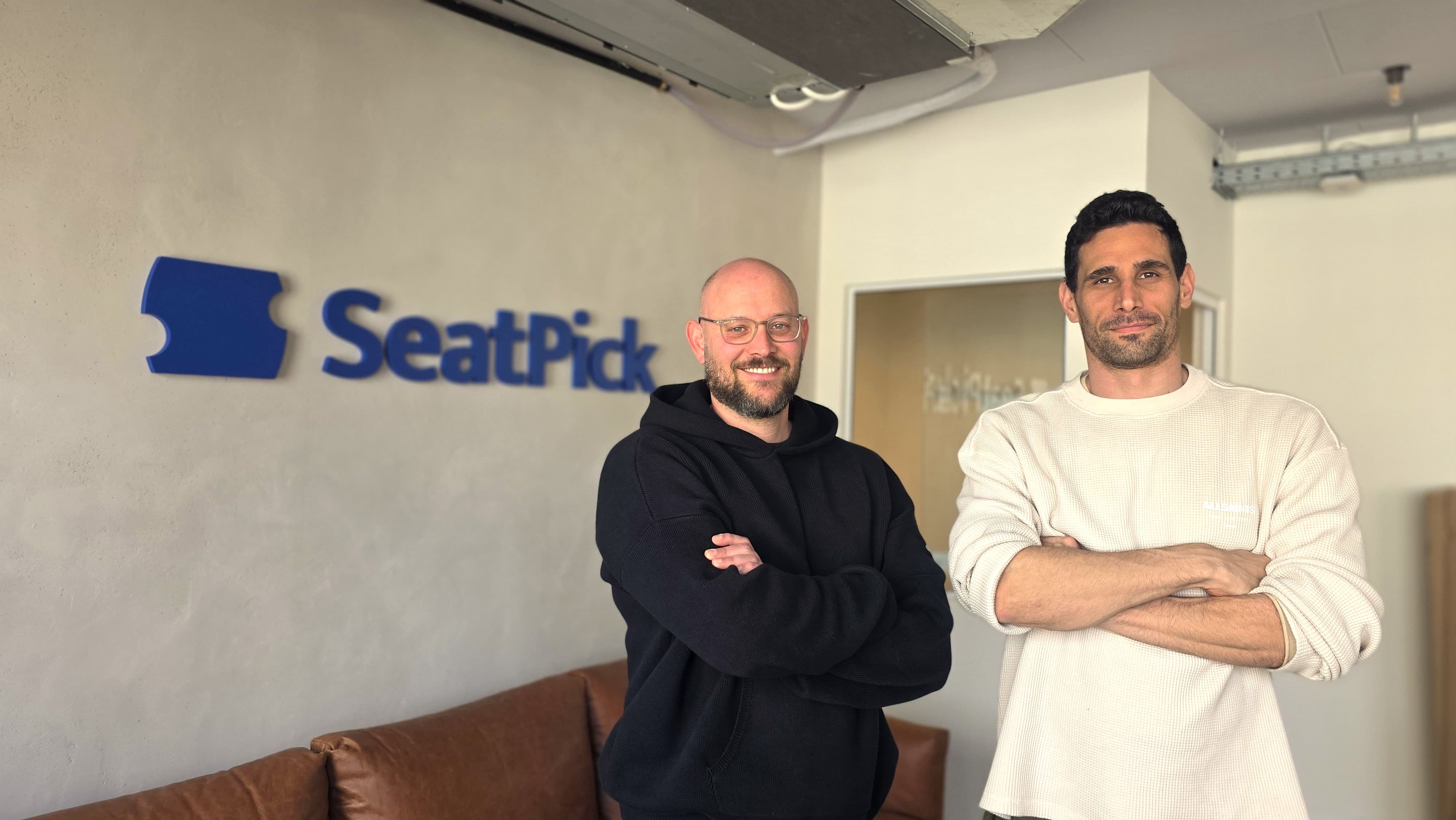
Then one night I ran into Guy at a bar in Tel Aviv. We hadn't seen each other in years. He'd gone into tech and had experience building a startup, but found himself wanting to do something new. We started meeting up, throwing ideas back and forth. He was the technology side, I was the market side. We're very different people with very different skill sets, but we come from the same values. I think we each just believed the person sitting across from us was smart and good. And that was enough.
$200,000 and the pit of despair
We started in 2017 with a B2B idea - an exchange platform to bring some order to the chaos of the ticket industry. We raised $200,000. That was it. The total capital of the company.
Nobody wanted to fund a ticketing startup in Israel. It wasn't SaaS, nor was it cyber. VCs didn't get it. We met with every angel, every fund - but almost all of them said no. Guy was on minimum wage. I went through a stretch where I took nothing.
After a year I realised the B2B model was too early. The market outside the US was so behind - brokers didn't even have APIs. So we pivoted to consumers. We'd be the Skyscanner of tickets: aggregate every major resale platform, show fans everything side by side, help them find the best deal. The idea was right. But nobody came. We were in a WeWork watching other startups celebrate while we had crickets.
I remember the month we hit $5,000 in commission. There was applause in the family WhatsApp group and it felt like we were heading in the right direction. Then $7,000.
And then COVID hit and our entire industry vanished overnight.
Guy and I sat down and genuinely discussed shutting the company. We had a few thousand dollars left in the account. Thousands, not tens of thousands. Enough for servers and nothing else. No VC backing, no plan B.
We decided to leave the site live, but we both stepped away. I went back to the sea and started swimming again every day. Then I started working on a completely different startup in New York. It gained traction and things were looking promising - but then the market shifted, the economics collapsed, and I was staring at the same situation all over again.
I've learned to call that period the pit of despair. And I believe if you can go through it and come out the other side, you'll find your way. Most of the people you see succeeding have been there. They had zero cash, zero belief, but they just kept going.
"Do you see what's happening?"
While my new venture was losing steam in New York, Guy called me about SeatPick. "Do you see what's happening on the site?"
It was the summer of 2021. The delayed Euros. Stadiums reopening. We were suddenly number one on Google for "England Euro tickets." Half a million users in a month. The site was barely functional - maps broken, servers crashing. But people were coming. The SEO work we'd done years earlier, almost as an experiment, had quietly built up. And competitors had died during COVID, so we'd inherited their space.
England made the final. We were on top of Google for every search around it.
I was working on my New York company in the morning and SeatPick in the evening. It was absurd. But SeatPick kept growing.
Eventually I met Guy at a bar in Tel Aviv again. Same setup as the first time, years earlier. The site was doing about $50,000 a month with almost no costs. He said: what do you want to do? I said: I think we can grow this ten times.
We went way further than that.
Right now
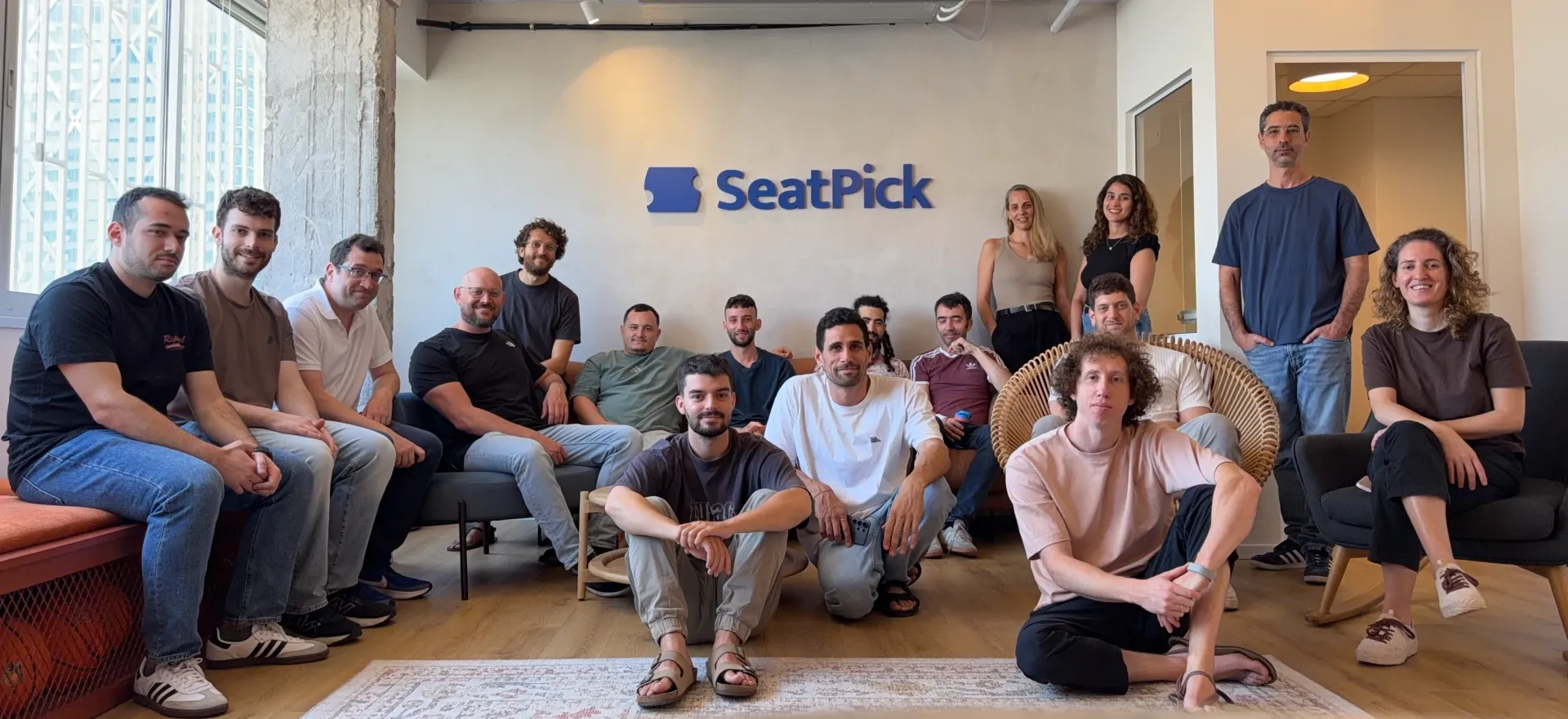
A year and a half ago we were five people. Now we're close to sixty, probably a hundred by the end of the year. We're on track to process around $100 million in ticket sales this year. We've expanded from UK football to music, NBA, NFL, tennis - across fifteen markets. We're profitable. I joke with the team that we keep trying to break our profitability by hiring aggressively, and we keep failing.
An advisor of ours - former VP Product at Lemonade - keeps telling me and Guy: "You don't understand what you've built. You need to enjoy it."
And he's right - we really should. But there's something in our DNA from swimming that makes it hard to stop. You break a record and a minute later you're planning the next one.
This World Cup
This tournament is breaking new ground for us. We're used to helping American fans buy tickets to events in Europe. Premier League matches, Champions League finals, Taylor Swift in Paris. Now, for the first time, we're helping them find tickets in their own country.
The US is undoubtedly the biggest ticket market in the world, and until recently, American fans didn't really know who we were. This World Cup flipped that. Millions of fans across the US have been searching for tickets, many of them navigating the resale market for the first time.
Am I nervous? Always. What keeps me up is making sure the experience is right - that fans are getting their tickets on time, that the platform holds up, that if anything goes wrong we've got their back.
This is probably the last World Cup for Messi and Ronaldo. For a lot of fans this is a once in a lifetime event. A ticket to a World Cup semi-final isn't a t-shirt. You can't return it and try again. If someone saved up for months to take their kid to a match, I need that to go right.
Four matches left
Recently, I've been noticing a feeling that I recognise from my swimming days. The last hundred metres of a race, when your lungs are burning and your arms are heavy and you can see the wall. You don't think about technique or strategy - you just go.
That's what this month has felt like. The Semi-finals in Dallas and Atlanta before the final at the MetLife Stadium on July 19. I don't know exactly what this means for us long-term - how the company changes, what the US market looks like for SeatPick after the trophy is lifted. We want to stay. We want to get heavy into the US. We want to help fans all over the world go to American events - not just the World Cup, but everything after it.
But that's for later. Right now, there's a kid somewhere in America who grew up watching this sport the way I grew up watching Ronaldo in '98. And he's looking for a ticket to a semi-final, or maybe even the final. I want him to find it.
Gilad Zilberman is the Co-Founder and CEO of SeatPick.