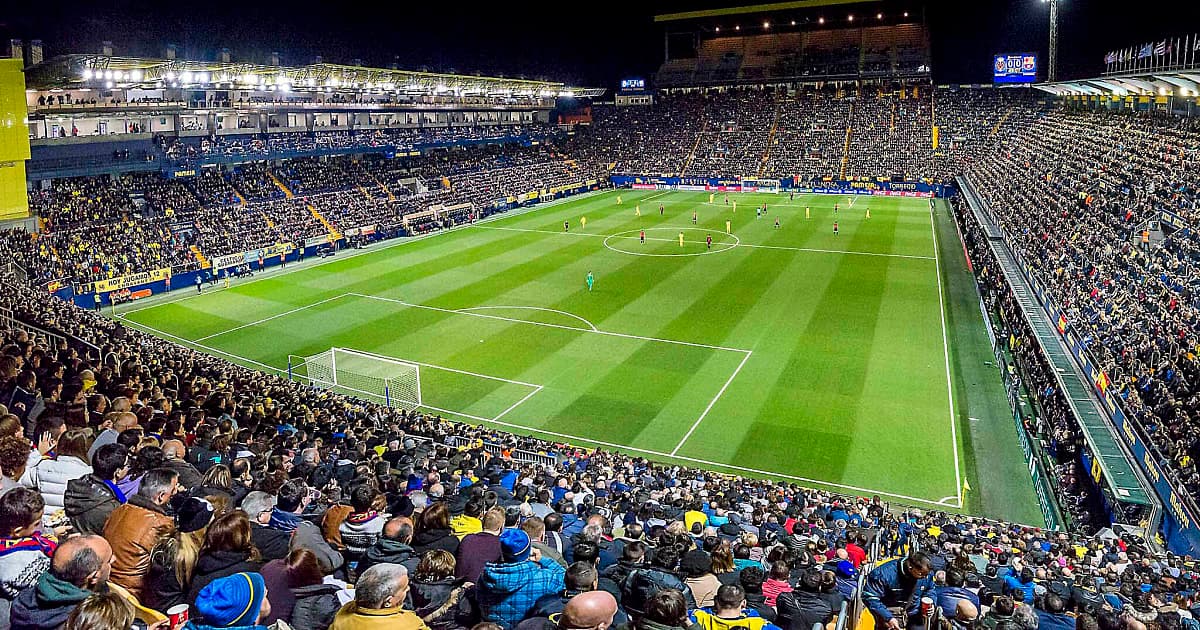
La Liga matches are community events in the Spanish city of Villarreal, considering Estadio de la Ceramica holds 21,332 spectators and the city's population is 50,000. The vanilla town has significantly impacted the Spanish and European football landscape.
Villarreal CF has played over 25 seasons in La Liga, but the closest the club came to the title was the 2007-08 season, ranking second behind the champion Real Madrid. However, fans of the Yellow Submarine tasted success in the UEFA Europa League in the 2020–21 season, when in the final, they were more accurate in the penalty shoot-out against Manchester United.
A European title was long in the making, considering Villarreal CF has been a staple member of UEFA competitions for two decades. The journey started after a 2002 debut in the defunct UEFA Intertoto Cup. Villarreal participated in the UEFA Cup on 3 occasions, and have spent the majority of their time playing 10 seasons in the UEFA Europa League, and also competed in the UEFA Champions League a number of times too.
Although the countryside of Villarreal was originally famous for its oranges, the club refocused its attention on football after its debut in a La Liga in 1998. Local fans and international supporters flock to the famous El Madrigal to watch the Yellow Submarine.
Villarreal CF tickets are available at SeatPick, where supporters can compare prices for Copa del Rey or La Liga football matches.
About Villarreal Football Tickets
Compared to other Spanish clubs, Villarreal is a latecomer, being founded in 1923 as Club Deportivo Villarreal. In the years preceding the Spanish Civil War, the club was a relatively anonymous member of regional competitions.
However, CD Villarreal disbanded in 1942, leaving the small community without a football team for a short period. It didn't take long for locals to start an initiative for the club's rebirth, which occurred in 1947 as CAF Villarreal, a name changed in 1954 to the present Villarreal CF.
The club might have continued its stint in the lower tiers of Spanish football if it wasn't for an angel investor. When in 1997, the club was taken over by businessman Fernando Roig, millions poured into the budget, and management went out shopping for top-tier players.
In the 1998–99 season, Villarreal arrived in La Liga, and although it got relegated to the Second Division in the next season, the club made a rapid comeback in the 2000-01 season. Since then, except for the 2012–13 season, it's been a regular participant in the top tier of Spanish football and UEFA tournaments.
Roig's investment was not only in professional footballers. The owner nurtured the development of the youth academy with new training facilities, providing impetus for the further rise of one of the most underrated and overlooked football clubs.
Fans can join the adventure by purchasing Villarreal tickets at SeatPick. View the ticket listing and watch Villarreal play home games at Estadio de la Cerámica.
Major Rivalry
The cities of Valencia and Villarreal are 35 miles apart, the perfect distance for a regional rivalry, properly labelled Derbi de la Comunitat. Attitudes between Valencia CF and Villarreal were cordial in the past, but after Villarreal CF began its ascendancy in 1997, passions started to heat up, and Spain received a new La Liga derby.
The question of which city has the best club in the region so far has been tested on over 55 occasions, with Villarreal and Valencia quite evenly matched. There is also a low-key rivalry with Elche CF during home and away matches at Estadio Manuel Martínez Valero.
Top Managers
Chilean manager Manuel Pellegrini had one of the longest tenures in the club, coaching from 2004 until 2009. Villarreal was interested in extending Pellegrini's contract, but interest from other clubs interrupted their future cooperation.
Unai Emery assumed the helm in 2020, under whose leadership the club won its first title, rising to the top of the UEFA Europa League in the 2020–21 season.
Famous Footballers that Played for Villarreal CF
The anonymous roster of Villarreal CF was infused with some big names at the end of the 1990s. And the improved quality is reflected in the results produced on the football pitch. Some well-known players are:
- Diego Forlan
- Raúl Albiol
- Robert Pirès
- Juan Román Riquelme
- Pepe Reina
Estadio de la Ceramica – Villarreal Spain
Stadium Name: Estadio de la Cerámica
Capacity: 21,332
Address: Carrer Blasco Ibáñez, 2, 12540 Vila-real, Castelló, Spain
Description: Estadio de la Ceramica gets referred to as El Madrigal by local fans. The venue opened in 1923, with a series of renovations and expansions in 1952 and the next two decades. The stadium underwent reconstruction in the 1990s. Following the completion of the project in 1999, the venue received a new modern look and a capacity of 21,332 seats.
Fans can purchase tickets for Villarreal online at SeatPick, where they can view tickets and the seating plan. Alternative options are the club shop at the stadium or the gate a couple of hours before kick-off. There are a lot of local season ticket holders, but tickets rarely sell out. Ticket prices vary - for a La Liga match, they can range from £20 to £100 per ticket, even more for an FC Barcelona or Real Madrid home match.
Best Way To Travel
Villarreal is a small town and very easy to navigate. The stadium is located in the northern district of the city. It's a 10-minute walk from the centre and a 20-minutes from the railway station.
By Walking
Walking is the preferred method of travelling in the city. If you are coming from out of town or staying in a local hotel, the venue is within a 20-minute range from most parts of the city.
By Bus
Bus L1 is a regional line that connects the city with other towns in the Valencia region.
By Train
The local train station gets serviced by trains from Valencia and a few other regional cities.
Why are Villarreal nicknamed the Yellow Submarine?
Some fans say it's because the club is stealthy as a submarine. They are a team that has "surfaced" unexpectedly in La Liga and are making "waves".
But in reality, the nickname is derived from the Beatles song by the same name. During a football match in the 1967-68 season, a fan played the song El Submarino Amarillo on a battery-powered recorder after the team scored a goal, and supporters started to sing the lyrics, emphasizing the word yellow, as it's the club's colours.